Ask instead of navigate
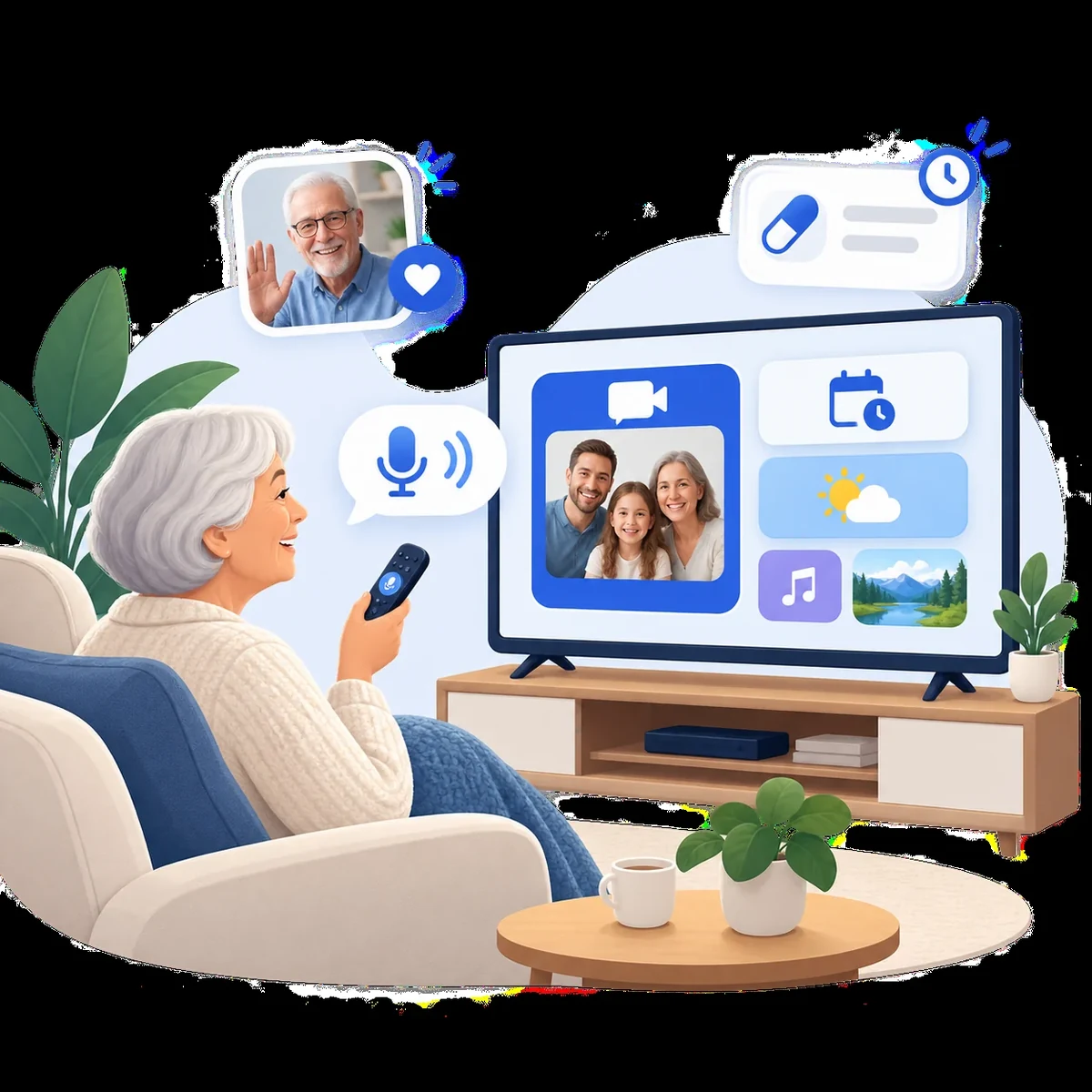
A person should be able to ask for a program, make a note, hear a reminder, contact a caregiver, or ask a question using ordinary speech.
CareTV is an assistive television and communication platform designed around memory, attention, sequencing, and cognitive accessibility—not around complicated remotes, menus, passwords, or repeated explanations.
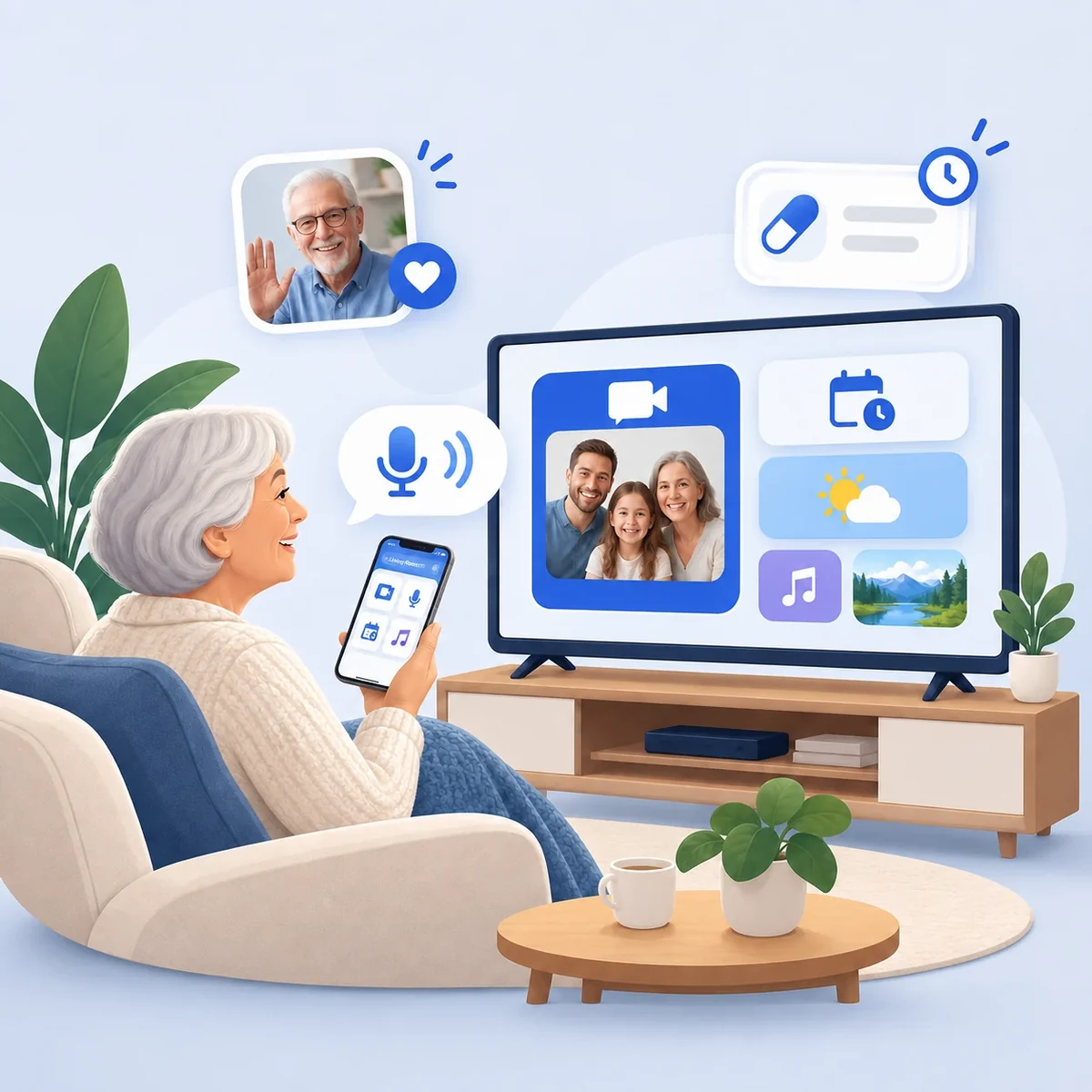
For professionals, policymakers, researchers & public agencies
A graduate-level overview of CareTV's accessibility model, local-first architecture, AI-assisted deterministic control, cameras and PTZ, communications, recording, privacy, broadband requirements, and public-benefit deployment model.
What changes
A person should be able to ask for a program, make a note, hear a reminder, contact a caregiver, or ask a question using ordinary speech.
Useful room, device, and conversation state can persist so the person does not have to reconstruct everything from memory.
Televisions, phones, tablets, and PCs can become coordinated parts of one accessible environment rather than separate technology puzzles.
The paradigm shift
Many digital systems assume that a person can remember instructions, manage credentials, navigate menus, sequence steps, and repeatedly explain what happened before. Those assumptions can become barriers in their own right.
Public communication often depends on memory-intensive processes: letters, deadlines, portals, passwords, call trees, case numbers, repeated identity checks, and one-time explanations. CareTV is a working research platform for showing what changes when cognitive accessibility is treated as a first-class design requirement.
Explore public-policy ideas →Global by design
CareTV is being structured for multilingual pages, Unicode text, translated interface labels, locale-aware presentation, and future right-to-left layouts. We prefer explicit language choice over silently guessing from a person’s country.
Initial language pages are included in this beta build. Translation will continue to be reviewed and refined as the project develops.
CareTV is being developed by Open Access Media Lab, an educational nonprofit research and development organization working on open and accessible media technology. The aim is to build reusable approaches that can help families, caregivers, public agencies, researchers, and technology teams.
Questions, accessibility feedback, research inquiries, government and policy conversations, and collaboration are welcome.